Results may vary from individual to individual
© 2006-2021 Marni Kinrys, The Wing Girl Method, WingGirlMethod.com and Wing GirlsTM. All rights reserved.
The F Formula: Your Wing Girl-Guided Blueprint For Combining The Nuts & Bolts Of Female Psychology With Your Genuine Personality—For Effortless Flirting, Attraction & Escalation With Any Woman


Right here on this page, I'm about to reveal to you the most common mistake that causes guys screw up after they approach a girl—but most have NO CLUE they're making it. See…

All up there are 22 in-depth interviews with dating experts and my top wing girls…
He talks to me without ever making a move or escalating. And in that case, he'll ALWAYS be doomed to the friend zone.
We talk for a while…but when he tries to take it to the 'next level' he gets rejected immediately…and comes off as a creep.
He ignites INSTANT CHEMISTRY. Then, when he "makes a move", the only thing us girls can think is, 'Um, YES PLEASE!'
It's NOT looks, status, height, or money… and DEFINITELY not luck.
Even male dating coaches sometimes chalk it up to a "numbers game"— when it's NOT. (We can't blame them though—girls' brains are wired to understand this stuff while guy's brains aren't.)
The truth is, every girl knows there's ONE THING that makes all the difference after the approach:
And if you're not experiencing scenario #3 REGULARLY, then you're not flirting in the specific ways women are hard-wired to respond to.
So with that said…
Think of the last time you were on a ROLLER COASTER.
There was such a mix of emotions, wasn't there?
The jittery feeling in your body as you climb up the hill…your heart thudding so loud you can hear it in your ears…
When the drop comes, you feel it deeply in your stomach. You feel exhilarating adrenaline—almost like you're flying without wings.
Afterward, you're elated… brimming with energy… and ready to do stuff you wouldn't normally do, right?
For us girls, NOTHING compares to a guy who can elicit an "emotional roller coaster" that keeps us guessing!
In fact, creating that roller coaster is 90% of the game after you approach.
Because—even if you're saying slightly "off-color" or
outrageous things to arouse her emotions—it's all in the context of fun and playfulness.
When you're riding a real roller coaster, you experience the "scary" emotion of falling that literally elicits fear of death.
But because it's in a fun, controlled environment where you don't actually fear death, that allows you to enjoy it.
That's exactly what good flirting does.
It allows girls to enjoy the excitement of escalating with you in the "controlled environment" of camaraderie and comfort—where there's no actual danger.
And when you know how to flirt properly, you create that environment—in any situation you want, with any girl you want.
And she'll always respond positively to you, no matter what "type" of girl she is… because this is an evolutionary trait all women have.
Her "ape brain" will feel safe and at ease with you—so you can banter and "push the limits" without coming off creepy.
In fact, when you're flirting properly, she'll be disappointed if you don't escalate.
And when you do, you'll feel to her like the most fun, exhilarating, and SECURE roller coaster she's ever been on—
And every girl secretly longs to "ride" THAT roller coaster ;)
Even if a girl gets approached 50 times a day, there's still a low chance she'll encounter a guy who can give her that safe "roller coaster" experience…
…which is something she NEEDS in order to feel good escalating with you.
That's why—once you read on to find out how to do it—you'll know more about this than the top one percent of guys who approach girls. You'll…
Now—most guys are lost when it comes to this. So if you're not sure where to begin to create that "emotional roller coaster", It's not your fault.
Studies have proven guys aren't wired to understand this the way girls do. And even for most girls—it happens below their level of conscious awareness, so they can't explain it to men.
But right now, I have a "secret weapon" for you that clarifies all of it, making flirting DEAD simple.
And words can't describe how excited I am to finally unveil it—it's been YEARS in the making.
See—until recently, I had a problem that prevented me from teaching guys to flirt:
I wasn't able to "see outside myself."
I was never able to pinpoint what was so effective about good flirting…so I could put it into methods and strategies that can actually help men learn it!
But then I met my Wing Girl Marissa—and that ALL changed.
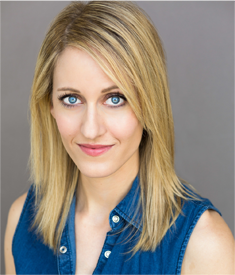 Marissa has an uncanny ability to pinpoint exactly what makes us girls respond to your flirting with intense attraction.
She explained every technical nuance of creating that "emotional roller coaster" in simple, elegant detail—that clarified everything for guys in our coaching sessions.
I was shocked—she can teach guys how to flirt in ways I'd been trying to get my finger on for YEARS.

I asked Marissa to put her flirting system into a plug-and-play FORMULA any guy can follow to become an exceptional flirter—and she did.
Now—this is the FIRST time I've let anyone besides me create a Wing Girl product—and for good reason.
Frankly, most women don't understand their own attraction "consciously" enough to teach it to guys.
They give the typical BS advice that makes girls think they're helping, but only confuses men (or worse yet, makes them wussier).
But when I saw the results Marissa got for the initial test subjects of her Flirting Formula, she over-the-top impressed me.
In fact, she's a complete genius.
Her step-by-step formula is all-inclusive…meaning any guy can use it to go from "hello" to the bedroom, a relationship, or wherever you want to take it—using just Three Phases of interaction.
She drew from decades of research—observing, questioning, and testing her findings on women of ALL kinds…using concepts from neuroimaging and evolutionary psychology studies to amplify its effectiveness.
She analyzed, probed and examined thousands of beautiful women for this—most of them didn't even know they were under the microscope!
…And she boiled it down to an all-encompassing, biologically-based FORMULA for keeping any women hooked on you—from the beginning of your interaction all the way to the end ;)
And once the product was finished, the guys we tested it on were in just as much shock as I was.
Girls were laughing at their jokes more, lingering around them longer, and excited to escalate—when before, their interactions almost always went nowhere.
See, the secret to Marissa's Flirting Formula—what most guys will never understand about flirting—lies in…
This amazing program alone will give you more options, greater satisfaction, and remarkable results in your dating life.
Marissa and I are so excited for you to experience that, I'm determined to knock off every single hesitation you may have to trying it out. That's why…
If you want, I can turn this into a short flash fiction piece, a checklist for safely sharing folder links, or a step-by-step guide to auditing a shared Meganz folder. Which would you prefer?
It started with a fragment — a half-remembered URL, a string of words people typed into search bars when they were trying to share a heap of files quickly: "https meganz folder cp link." At first glance it was nonsense, a mash of protocol, brand, and shorthand. But when you leaned into it, the phrase unfolded into a story about trust, convenience, and the small ways the web reshapes how we pass pieces of ourselves around. Scene 1 — The Link Appears A friend posts it in a group chat: "https meganz folder cp link." No punctuation, no explanation — just an invitation. For many, a file-hosting link is a neutral thing: a handy way to send photos, a report, or a collection of templates. For others, it is a spark of curiosity: who assembled this folder? What's inside? The sender, eager but distracted, assumes that the recipient will click. The recipient pauses. They imagine an archive of travel photos, or a neatly organized set of project files, or something less wholesome. The link itself is a kind of object that carries intent — sharing — but also uncertainty. Scene 2 — The Archive Meganz, a name that evokes secure storage and encrypted vaults to some, crowded folders to others. The folder behind that terse string is a small universe: nested subfolders, files with timestamps, duplicates with names that suggest revisions and revisions of revisions. There are PDFs with tracked changes, a folder of clips labeled "b-roll," a collection of scanned receipts, a text file titled "DO NOT DELETE," and one image named "IMG_9999_xx." Each filename is a breadcrumb. The investigator in you reads them aloud like a map. Patterns emerge: dates cluster around a week in March, several files show the same author metadata, and many items are versions of the same document — a group project caught in its constant remaking. Scene 3 — The People A folder is never only files; behind every file is a person. Comments in a shared text reveal a back-and-forth: terse directions, friendly banter, a terse reprimand about missed deadlines. There’s a voice you don't see directly but feel between revisions — a lead who prefers bullet points, a collaborator who uses color to communicate urgency. The way names appear in metadata, the times files were uploaded (late nights, early mornings), the devices that saved them — these are small intimations. You sense the rhythms of a team: bursts of productivity, followed by lull, punctuated by the occasional fevered edit session. Scene 4 — Motive and Risk Why send a Meganz folder this way? Convenience is obvious: large files, zero email attachments, a single URL that can ferry everything. But with convenience comes exposure. There are questions the folder doesn't answer: who else has this link? Was this meant for a closed group or the wider internet? A "cp link" — shorthand for a copy link, perhaps — can multiply distribution with a single forward. The investigator imagines scenarios: a mistaken public share, an accidental leak, someone deliberately spreading documents. The stakes vary: from embarrassing vacation photos to sensitive financial spreadsheets. The tension between utility and privacy hums beneath every click. Scene 5 — The Audit You begin an audit, the digital equivalent of walking a building, room by room. Look for clues: timestamps for unusual activity, filenames that contradict their contents, duplicates across folders that hint at piecemeal consolidation, and metadata that betrays a device or location. Check shared permissions — is the folder "anyone with the link" or restricted? Who last modified the files? Are there versions that disappear and reappear? Each inconsistency suggests a story. A suddenly added document at 2 a.m. could be hustle or cover-up. A file deleted and then restored could mean second thoughts or damage control. Scene 6 — The Ethics The narrative shifts from detective work to a moral pause. Do you delve deeper? Do you alert the sender that their folder may be overly exposed? Do you forward the link to someone who could get hurt, or do you protect the privacy of those involved? The online archive forces modern ethical choices: the right to know versus the right to privacy, curiosity versus responsibility. The investigator learns to weigh the thrill of discovery against potential consequences. Sometimes restraint is the most courageous act. Scene 7 — Resolution The group chat eventually fills with explanations. The sender admits they meant to share only with collaborators but copied the wrong link. There are apologies, renamed files, tightened permissions, and a quick, embarrassed clean-up. Or perhaps nothing happens; the link continues to float in the wild, accessible to anyone who stumbles upon it. Either outcome reveals something: how fragile digital boundaries are, how small slips can have outsized effects, and how people respond when confronted with the consequences of sharing. Epilogue — The Link as Parable "HTTPS Meganz folder cp link" is a terse incantation of modern digital life. It compresses convenience, collaboration, risk, and ethics into six words. It reminds us that every shared folder is an interpersonal act — a choice to make parts of your life portable and, often, public. It asks a simple question each time we click or forward: what responsibility comes with the tiny power to share? https meganz folder cp link
In over an hour of HD video footage, I pushed these gorgeous women HARD to give you the REAL answers every man needs to hear. These interviews will tie everything together by giving you access to what flirting looks like from inside the female brain—something most men will never understand. ($47 Value).
That's SEVEN exclusive bonuses with a total value of $238…that you're getting for FREE just as a "thank you" for picking up The F Formula.
Now—I bet you're wondering…
So—before I answer that, let me ask you a quick question:
Hurry--Order FFormula Today and Become One of Our Many Success Stories!
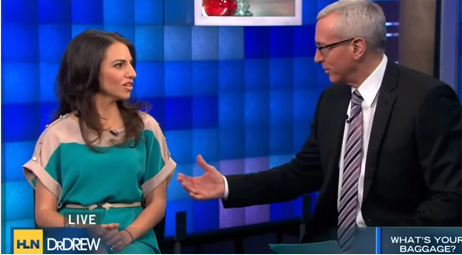
Simply put, Marni knows what women want! - Dr. Drew
"Marni has been prominently featured in The Los Angeles Times, CNN, Fox News, Men's Health and many other media outlets."


Mark, 43
"It works. I can definitely say the technique is working. I feel a lot more confident around women, just because I now feel like I can take risks, even say outrageous things."

Ali, 27
"I had no clue that what I considered flirting was actually not flirting at all. Now when I flirt women respond to me and flirt back. It's pretty amazing."

David, 36
"I always thought that flirting was saying something sexual to women. And I just couldn't bring myself to do that to women. I felt like I was assaulting them or something. With the examples in the program of what to say and the instructions on how and when to escalate, I can now spark attraction in women without ever having to say anything sexual at all. It's pretty amazing how women react to this and it's so much easier then what I was doing before."

David, 22
"I can flirt with anyone!!!! Thank you Marni and Wing Girl Team. This is amazing."

Andrew, 29
"You gave me the "tools" to be able to walk up to a girl on a deserted street late at night, talk to her without freaking her out and to instil in her the confidence to go for a drink straight away. "
If you want, I can turn this into a short flash fiction piece, a checklist for safely sharing folder links, or a step-by-step guide to auditing a shared Meganz folder. Which would you prefer?
It started with a fragment — a half-remembered URL, a string of words people typed into search bars when they were trying to share a heap of files quickly: "https meganz folder cp link." At first glance it was nonsense, a mash of protocol, brand, and shorthand. But when you leaned into it, the phrase unfolded into a story about trust, convenience, and the small ways the web reshapes how we pass pieces of ourselves around. Scene 1 — The Link Appears A friend posts it in a group chat: "https meganz folder cp link." No punctuation, no explanation — just an invitation. For many, a file-hosting link is a neutral thing: a handy way to send photos, a report, or a collection of templates. For others, it is a spark of curiosity: who assembled this folder? What's inside? The sender, eager but distracted, assumes that the recipient will click. The recipient pauses. They imagine an archive of travel photos, or a neatly organized set of project files, or something less wholesome. The link itself is a kind of object that carries intent — sharing — but also uncertainty. Scene 2 — The Archive Meganz, a name that evokes secure storage and encrypted vaults to some, crowded folders to others. The folder behind that terse string is a small universe: nested subfolders, files with timestamps, duplicates with names that suggest revisions and revisions of revisions. There are PDFs with tracked changes, a folder of clips labeled "b-roll," a collection of scanned receipts, a text file titled "DO NOT DELETE," and one image named "IMG_9999_xx." Each filename is a breadcrumb. The investigator in you reads them aloud like a map. Patterns emerge: dates cluster around a week in March, several files show the same author metadata, and many items are versions of the same document — a group project caught in its constant remaking. Scene 3 — The People A folder is never only files; behind every file is a person. Comments in a shared text reveal a back-and-forth: terse directions, friendly banter, a terse reprimand about missed deadlines. There’s a voice you don't see directly but feel between revisions — a lead who prefers bullet points, a collaborator who uses color to communicate urgency. The way names appear in metadata, the times files were uploaded (late nights, early mornings), the devices that saved them — these are small intimations. You sense the rhythms of a team: bursts of productivity, followed by lull, punctuated by the occasional fevered edit session. Scene 4 — Motive and Risk Why send a Meganz folder this way? Convenience is obvious: large files, zero email attachments, a single URL that can ferry everything. But with convenience comes exposure. There are questions the folder doesn't answer: who else has this link? Was this meant for a closed group or the wider internet? A "cp link" — shorthand for a copy link, perhaps — can multiply distribution with a single forward. The investigator imagines scenarios: a mistaken public share, an accidental leak, someone deliberately spreading documents. The stakes vary: from embarrassing vacation photos to sensitive financial spreadsheets. The tension between utility and privacy hums beneath every click. Scene 5 — The Audit You begin an audit, the digital equivalent of walking a building, room by room. Look for clues: timestamps for unusual activity, filenames that contradict their contents, duplicates across folders that hint at piecemeal consolidation, and metadata that betrays a device or location. Check shared permissions — is the folder "anyone with the link" or restricted? Who last modified the files? Are there versions that disappear and reappear? Each inconsistency suggests a story. A suddenly added document at 2 a.m. could be hustle or cover-up. A file deleted and then restored could mean second thoughts or damage control. Scene 6 — The Ethics The narrative shifts from detective work to a moral pause. Do you delve deeper? Do you alert the sender that their folder may be overly exposed? Do you forward the link to someone who could get hurt, or do you protect the privacy of those involved? The online archive forces modern ethical choices: the right to know versus the right to privacy, curiosity versus responsibility. The investigator learns to weigh the thrill of discovery against potential consequences. Sometimes restraint is the most courageous act. Scene 7 — Resolution The group chat eventually fills with explanations. The sender admits they meant to share only with collaborators but copied the wrong link. There are apologies, renamed files, tightened permissions, and a quick, embarrassed clean-up. Or perhaps nothing happens; the link continues to float in the wild, accessible to anyone who stumbles upon it. Either outcome reveals something: how fragile digital boundaries are, how small slips can have outsized effects, and how people respond when confronted with the consequences of sharing. Epilogue — The Link as Parable "HTTPS Meganz folder cp link" is a terse incantation of modern digital life. It compresses convenience, collaboration, risk, and ethics into six words. It reminds us that every shared folder is an interpersonal act — a choice to make parts of your life portable and, often, public. It asks a simple question each time we click or forward: what responsibility comes with the tiny power to share?
