Welcome back!
Ready to check out?
You're just one click away from fantastic style and even better savings!
Steinberg’s Virtual Guitarist 2 (VG2) occupies a curious corner of music tech history: an early, well-designed “auto‑guitar” instrument that gave producers instant, playable rhythm parts without needing a session guitarist. It bundles realistic articulations, rhythm players/styles, and chord‑driven pattern playback—making it invaluable for fast songwriting, sketching arrangements, and teaching basic rhythm concepts. Steinberg supported VG2 with large ISO installers, style libraries, and documentation, and long after official retail life it remained useful in DAW workflows for those who prized speed over obsessive realism.
At the same time, the long tail of software distribution—sites like GetIntoPC—shows a parallel story about accessibility, legality, and user trust in the digital age. GetIntoPC and similar archives offer free downloads of legacy installers (including VG2 builds), often with repackaged ISOs, system requirement notes, and installation guides. For many hobbyists and producers on shoestring budgets, these sites feel like salvation: they provide older commercial tools no longer sold, or images of official installers that are hard to locate. But that convenience comes with tradeoffs and real risks.
Steinberg’s Virtual Guitarist 2 (VG2) occupies a curious corner of music tech history: an early, well-designed “auto‑guitar” instrument that gave producers instant, playable rhythm parts without needing a session guitarist. It bundles realistic articulations, rhythm players/styles, and chord‑driven pattern playback—making it invaluable for fast songwriting, sketching arrangements, and teaching basic rhythm concepts. Steinberg supported VG2 with large ISO installers, style libraries, and documentation, and long after official retail life it remained useful in DAW workflows for those who prized speed over obsessive realism.
At the same time, the long tail of software distribution—sites like GetIntoPC—shows a parallel story about accessibility, legality, and user trust in the digital age. GetIntoPC and similar archives offer free downloads of legacy installers (including VG2 builds), often with repackaged ISOs, system requirement notes, and installation guides. For many hobbyists and producers on shoestring budgets, these sites feel like salvation: they provide older commercial tools no longer sold, or images of official installers that are hard to locate. But that convenience comes with tradeoffs and real risks.
*Discount applied on the current website price at the time of order. Offer only valid for new customer first contacts order over $10. Maximum discount of $100. Cannot be combined with any other offers. Promotions are subject to change without notice. We reserve the right to cancel orders that are in breach of the terms and conditions of this offer.



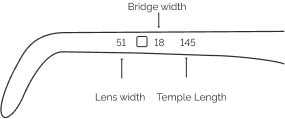
| Lens Width | Bridge Width | Temple Length | |
|---|---|---|---|
| XS | < 42 mm | < 16 mm | <=128 mm |
| S | 42 mm - 48 mm | 16 mm - 17 mm | 128 mm - 134 mm |
| M | 49 mm - 52 mm | 18 mm - 19 mm | 135 mm - 141 mm |
| L | >52 mm | >19 mm | >= 141 mm |
Buying eyewear should leave you happy and good-looking. Use our sizing tool to find frames that best fit your unique facial measurements.
Grab a regular card with a magnetic stripe on the back. Student IDs, credit cards and gift cards work well to start our online PD tool.
You may have received our paper PD measurement tool in your recent online order. In order to use this tool, place the ruler on your eyes so that the "0" lines up at the centre in between your eyes. Add up the two numbers, to get your PD. See example below:
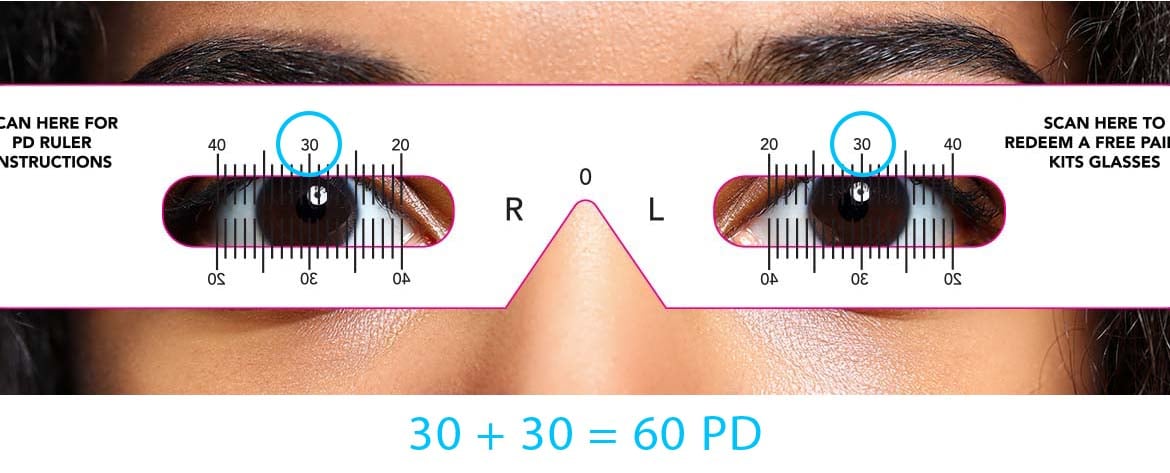
Click on this link to download and print your own PD measurement tool.
DOWNLOAD



 Check order status
 Place reorder
 Chat with us





 Use your insurance
 Help
Help